

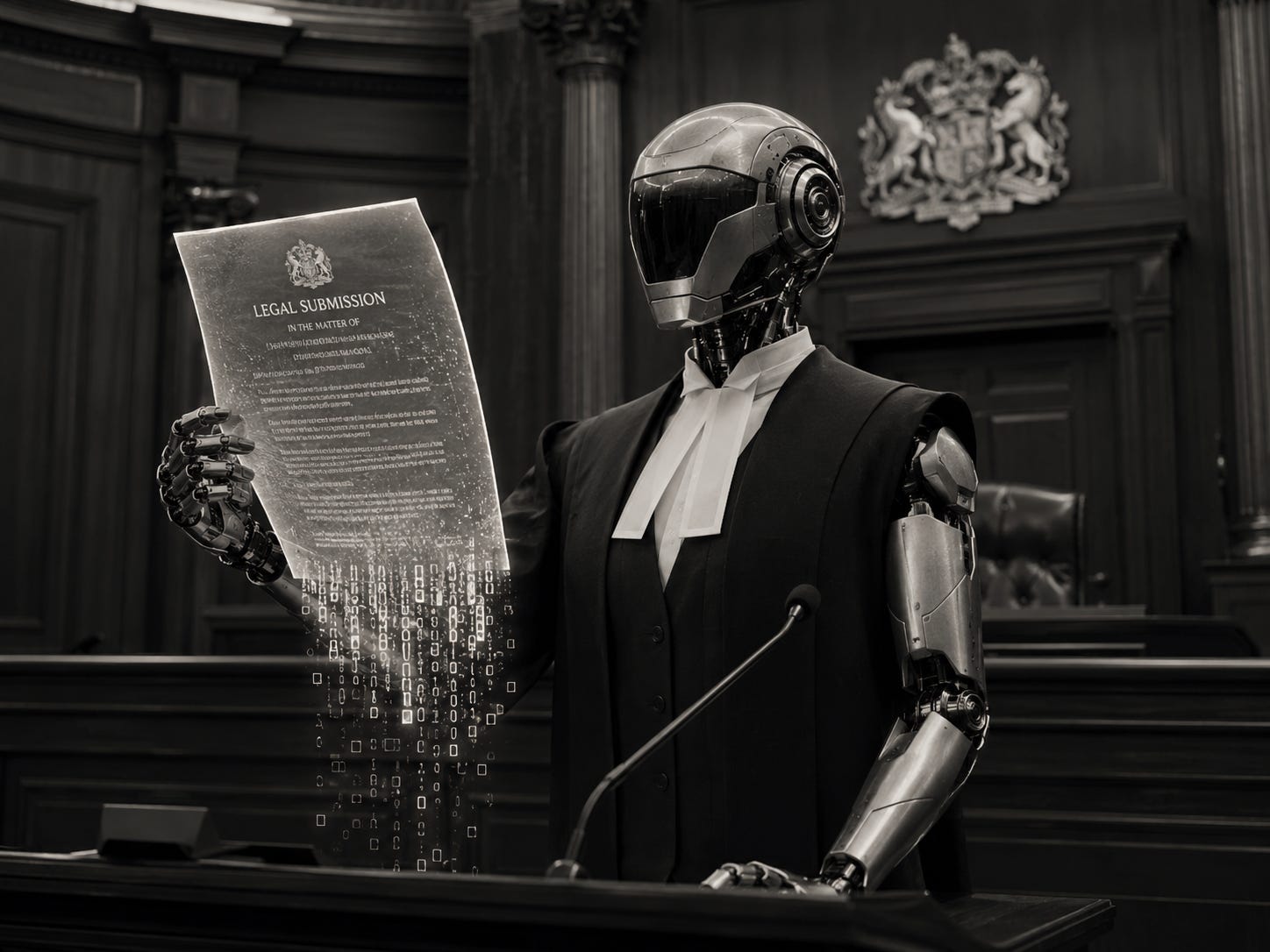
Just as I was preparing to speak about how incidents involving AI hallucinations appeared to have abated somewhat in the UK, many of you sent me this case:
Andreea-Maria Tobosaru v Court of Law Craiolva, Romania [2026] EWHC 1720 (Admin)
In this legal article, I do not consider the judgment in detail. My focus is on the postscript. One of the interesting observations by Mr Justice Sweeting was:
“105 As far as the appeal was concerned the errors came to light prior to the hearing and therefore had no impact on argument or the court’s judgment. I have accepted the apology given on behalf of the Crown Prosecution Service and the assurance that there was no attempt to mislead. I have noted the steps taken to ensure that there is no repetition but considered that it was necessary to set out what had taken place in this judgment given the serious consequences that an error of this nature might have had in other circumstances. It would be naive to assume that there will not be an increasing use of artificial intelligence in legal work in future; indeed, that may be both necessary and beneficial. The episode highlights the risks of its use without appropriate oversight particularly for legal research.”
My full legal article can be read here.
My question for the profession is this: are we becoming hardened to AI hallucinations? As at July 2026 my trackers record more than 1,700 instances worldwide and 67 in the UK alone. Do we still regard these as one of the greatest threats to the administration of justice or are we quietly reclassifying them as an acceptable cost of doing business?
Finally, I want to say a warm thank you to everyone who has been sending me cases involving AI-related issues from around the world. Without your help, these legal articles would be impossible to write.